
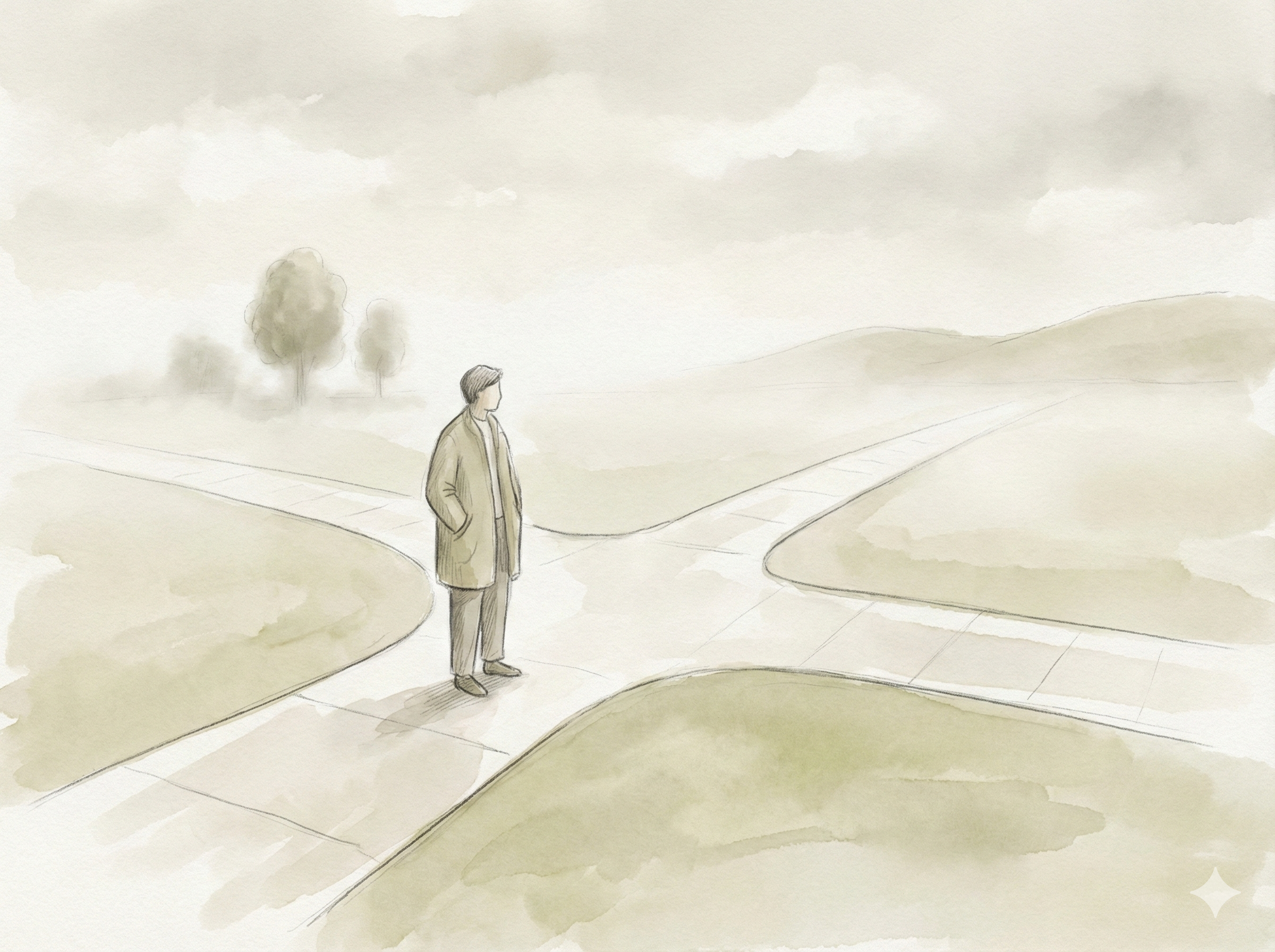
I’ve started noticing a weird pattern in how we talk about AI. One day someone says it’s “incredible” and a total game-changer. The next, they’re calling it “overhyped,” “generic,” or basically useless.
The interesting part is that both people are often using the exact same tool. After a while, I realized the difference isn’t the model or some secret prompt trick. It’s whether any actual thinking happened before the tab was even opened. AI doesn’t actually replace thinking—it quietly punishes you for skipping it.
Why AI feels so random
When you go into a chat without a clear mental model, everything it spits out feels like a roll of the dice. One answer sounds okay, the next feels shallow, and you’re left wondering why the quality is swinging so wildly.
But the randomness usually isn’t coming from the AI; it’s coming from us. Without a point of view, every output just feels like noise. There’s nothing to compare it against, nothing to reject, and nothing to push back on. The AI is generating options, but because you haven’t decided what actually matters yet, none of them land.
That’s why beginners often feel like the AI "doesn't get it." There’s nothing solid for it to react to.
AI is allergic to vague intent
I’ve learned that AI works best when it’s responding to tension. If you bring a fuzzy goal or a "just exploring" mindset, the output is going to mirror that vagueness perfectly.
You’ll get safe suggestions, balanced language, and a lot of qualifiers.
The tool isn't being lazy—it’s being accurate. Vague intent produces vague results. Clear intent, on the other hand, creates friction. And honestly, friction is where the usefulness actually starts.
Thinking is the hidden input
Most of the advice out there treats the prompt as the input. It’s not.
The real input is everything that happens before you start typing: what you believe is important, what you’re willing to trade off, and what you think you might be wrong about.
When you skip that part, the AI has nothing to amplify. It doesn’t fail; it just reflects the emptiness back at you. That reflection is uncomfortable, so it’s easy to blame the tool and move on.
The quiet cost of moving too fast
The real danger isn’t that AI gives bad answers. It’s that it makes it incredibly easy to move forward without ever actually deciding anything.
You can stay busy, look productive, and seem competent—while avoiding the hardest part of the work: choosing a direction and owning it. AI doesn't stop you from thinking; it just removes every excuse you had for not doing it.
I still catch myself doing this
I’d be lying if I didn't still open an AI window too early. Some days I’m tired or unsure, and I’m secretly hoping the tool will tell me what to think so I don’t have to sit with the discomfort of a blank page.
Whenever the output feels flat, I know exactly what happened: I tried to outsource the hard part. The second I slow down and decide what I care about first, the AI starts working again—not as a replacement for my brain, but as a force multiplier for it.
Final Thought
AI doesn’t replace thinking; it punishes you for skipping it.
It’s not judging you, but it is removing the delay between a vague idea and obvious feedback. Once that delay is gone, the only way to get better results is to do the work that can’t be automated: deciding what matters before you ask for help.
I’m still learning how to do that consistently. And every time I forget, the AI reminds me—instantly.